
The exterior of different types of shoes appears straightforward, yet their construction involves a complicated system of different elements. The function of each component is to provide either support, protection, comfort, or style. The understanding of these components enables better assessment of product quality and selection of suitable footwear and improved interaction with production companies. The complete shoe structure is presented here through a practical explanation that uses straightforward language. In this article, we are discussing the Different Parts of a Shoe with Pictures.
.
Footwear is a basic fashion accessory. We buy readymade shoes of different brands, but we never thought about how many parts a of shoe has. Eyelets, sole, heel, and toe are the very basic parts of a shoe. Everyone knows about them. But there are 15 more parts in a shoe.
Basic Parts of a Shoe with Pictures
What are the basic parts of a shoe? Find out here:
- tongue
- eyelets
- eyestay
- laces
- vamp
- toe cap
- mudguard
- outsole
- feather edge
- midsole
- heel seat
- counter
- sole
- upper
- heel
- collar
- topline
- quarter
- vamp (bottom section also marked again)
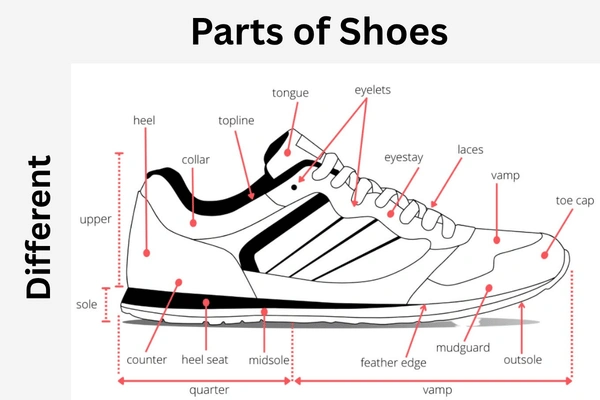
What are the Parts of a Shoe?
Here are the details of the different parts of a shoe according to the top picture:
1. Tongue: The tongue sits under the laces and protects the top of your foot from pressure. It also helps keep out dust and adds comfort when the shoe is tightly laced.
2. Eyelets: Eyelets are the small holes where the laces pass through. They keep the laces in place and help distribute tension evenly.
3. Eyestay: The eyestay is the panel that holds the eyelets together. It strengthens the lacing area and helps the shoe fit securely.
4. Laces: Laces are used to tighten or loosen the shoe for a better fit. They allow you to adjust comfort and keep the shoe firmly on your foot.
5. Vamp: The vamp is the front upper part that covers the top of your foot. It plays a big role in flexibility and overall appearance.
6. Toe Cap: The toe cap covers the front tip of the shoe. It adds protection and improves durability in high-wear areas.
7. Mudguard: The mudguard wraps around the lower part of the shoe above the sole. It protects against dirt, water, and scuffs.
8. Outsole: The outsole is the bottom layer that touches the ground. It provides traction, grip, and resistance to wear.
9. Feather Edge: The feather edge is where the upper meets the sole. It creates a clean finish and helps in the shoe’s construction.
10. Midsole: The midsole sits between the outsole and upper. It absorbs shock and provides cushioning for comfort.
11. Heel Seat: The heel seat is the area where your heel rests inside the shoe. It stabilizes the foot and keeps it properly aligned.
12. Counter: The counter is a stiff part at the back of the shoe. It supports the heel and helps maintain shape.
13. Sole: The sole is the entire bottom section of the shoe. It includes layers that provide support, comfort, and grip.
14. Upper: The upper is the top part covering the foot. It determines style, breathability, and fit.
15. Heel: The heel is the rear bottom part of the shoe. It provides elevation and absorbs impact while walking.
16. Collar: The collar surrounds the opening of the shoe. It cushions the ankle and improves comfort.
17. Topline: The topline is the upper edge around the shoe opening. It shapes how the shoe sits against your foot.
18. Quarter: The quarter is the side and back section of the upper. It supports the foot and connects different shoe parts.
19. Vamp (Bottom Section): This refers to the lower front portion near the sole. It helps connect the upper to the sole and adds structure.
These are the basic parts that any type of shoe must have.