
Printing plays an important role in business marketing, packaging, branding, events, and daily operations. Whether it is brochures, banners, business cards, product labels, or promotional materials, the quality of printed items directly affects how people view a brand. From promotional banners to branded marketing materials, businesses rely on trusted printing partners such as Star Flex to deliver materials that accurately represent their brand identity. In this article, we are discussing the Common Printing Challenges and how to Avoid Them.
However, printing projects do not always go as planned. Problems such as poor color quality, blurry images, incorrect file formats, and material issues can lead to wasted time and unnecessary costs. Many of these challenges can be avoided with proper preparation and a better understanding of the printing process.
Understanding the most common printing challenges can help businesses avoid unnecessary setbacks and achieve better results from their print projects.
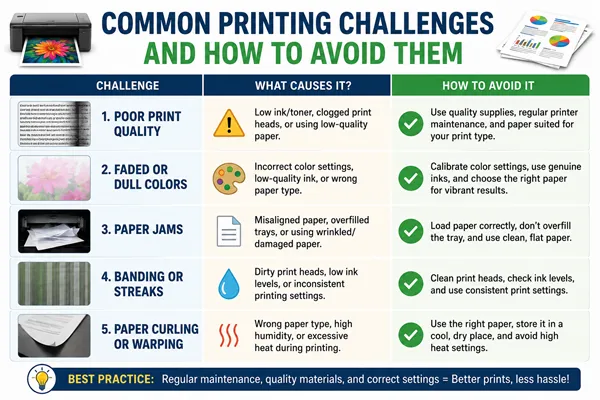
Color matching issues
Many businesses are surprised when a brochure or flyer arrives from the printer looking slightly different from what they approved on screen. This can be frustrating, especially for businesses that rely on specific brand colors.
The main reason for this difference is that screens and printers use different color systems. Digital displays create colors using light, while printers create colors using ink. As a result, some shades may appear brighter or darker once they are printed.
Before moving forward with a large order, it is a good idea to review a printed proof whenever possible. This allows businesses to identify color differences before full production begins. Using standardized brand color references can also help maintain consistency across different print projects.
Low-quality images and graphics
Sometimes a design appears visually appealing on a screen, but the printed version appears different. This can be due to poor image quality since the design requires high-quality images for it to appear professionally done. As a result, the images may look blurry, unclear, or pixelated after printing.
A common reason for this problem is using images taken from websites or social media. Graphics that work well on a website do not always provide the clarity needed when printed.
For a better outcome of printed materials, it is always recommended that you use high-quality images taken from their sources. Before the submission of your files for printing, ensure that all images have been checked.
Problems with file setup
Even well-designed artwork can run into trouble if the file is not prepared correctly. Missing fonts, incorrect dimensions, and formatting errors can all affect the final output.
Printing companies often receive files that require adjustments before production can begin. In some cases, these changes can delay deadlines or alter the appearance of the design.
Creating print-ready files according to the printer’s specifications can help eliminate many of these issues. It is also helpful to double-check document sizes, margins, and image placement before submission. When there is any uncertainty, asking the printer for artwork guidelines can save time and prevent mistakes.
Important content is placed too close to the edge
Many printed products go through a trimming process after printing. If text, logos, or important design elements are positioned too close to the edge, they may be partially removed during cutting.
This problem is especially common with flyers, brochures, postcards, and business cards. Even a minor trimming can affect the appearance of the final product.
Keeping important information within a safe area helps reduce this risk. Designers should also include the appropriate bleed area when preparing artwork. These small adjustments help ensure that the finished piece looks clean and professional.
Choosing the wrong paper or material
The choice of material for the print project plays an important role in the final result since what will work well for one type of paper will probably look different on another.
For example, using glossy paper helps give colors that pop up, whereas a matte finish results in a more subtle look. Likewise, signs meant for outdoor use should be durable enough to withstand environmental conditions compared to indoor prints.
Many businesses focus on cost when selecting printing materials like Vinyl, Flex, and Films, but the intended use of the printed product is equally important.
Considering the purpose of the printed piece and the environment in which it will be used can lead to better long-term results.
Last-minute design changes
While changes might be a common aspect of the process, making changes right before production may pose problems to both the client and printer. Adjustments made shortly before production increase the risk of errors being overlooked.
A revised phone number, updated pricing information, or a modified design element may seem like a small change. However, if it is not carefully reviewed, it can create problems that are only discovered after printing is complete.
To avoid such problems, an established approval process can serve as a helpful tool. After the final proof has been approved, any further changes need to be examined.
Delays caused by poor planning
Printing jobs usually follow some steps, such as designing, proofreading, approving, production, and delivery. Sometimes even small problems may cause delays if deadlines are too tight.
Businesses often think that the printing job can start right after designing the artwork is completed. However, the schedule for production may differ according to the level of difficulty of the print job, availability of materials, and quantity of orders.
Planning ahead will give you enough room to make decisions without any rush. It will provide sufficient time for proofing before making changes.
The value of clear communication
Many printing challenges can be traced back to simple misunderstandings. Expectations regarding colors, finishes, quantities, or delivery schedules may not always be communicated clearly.
Strong communication between clients and printers helps ensure that everyone is working toward the same goal. Sharing detailed project information at the beginning can reduce confusion and minimize the likelihood of errors.
When questions arise, it is always better to seek clarification rather than make assumptions.
Final thoughts
Printing is an investment in how a business presents itself to customers. While challenges can occur during the process, many of the most common issues are preventable with careful planning and attention to detail. Businesses that understand these common printing challenges are better positioned to create printed materials that look professional, communicate effectively, and leave a positive impression on their audience.
- You may love to read: Common Printing Defects in Fabric | Causes and Remedies