
Fashion accessories are often judged in a few seconds. We notice the color of a handbag, the shape of a heel, the shine of a buckle, or whether a design feels current. What we do not see immediately is everything happening underneath.
A bag that keeps its shape after months of use, or a pair of shoes that still feels comfortable after several hours, depends on far more than appearance. Material selection, reinforcement, lining, stitching, hardware and finishing all affect how a product performs once it leaves the store.
For people working in fashion, textiles or product sourcing, this makes accessories particularly interesting. A relatively small product can bring together several materials, different manufacturing techniques and both decorative and functional components. Understanding those details also helps explain why two accessories that look similar in a photograph can behave very differently in real life.
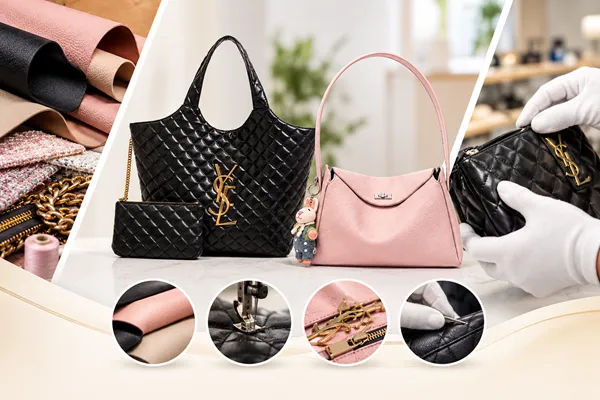
Material choice starts with the intended use
There is no single material that works best for every fashion accessory.
A structured work bag has different requirements from a soft evening bag. A pair of lightweight summer sandals needs a different combination of materials from a boot designed for colder weather.
This sounds obvious, but it is easy to forget when design decisions begin with appearance alone.
For handbags, the outer material influences structure, weight, texture and maintenance. Leather, suede, denim, canvas, woven textiles and synthetic materials each create a different result.
A firm material can help a tote or top-handle bag maintain a defined silhouette. Softer materials work naturally with hobo bags, pouches and designs intended to drape against the body.
Looking through a broad handbag retailer such as DOKIBAGS makes the difference easy to see. Even when two bags serve a similar purpose, changing the material or construction can completely alter their appearance and the way they are carried.
Footwear works in much the same way.
A material selected for a pointed pump may need to hold a clean shape around the toe, while the material used for a soft slide sandal needs to flex comfortably with the foot.
The first question should therefore be practical:
What is this product expected to do?
The answer should influence the material before decoration is added.
The outer material is only one layer
Consumers naturally focus on the visible surface, but many accessories depend on layers that are rarely noticed until something goes wrong.
Take a handbag as an example.
Under the outer material there may be reinforcement around the base, handles or closure. Some bags use additional layers to create structure, while others intentionally use less support so the body remains soft.
The lining is another part of the construction.
It needs to work with the exterior rather than simply cover the inside. A heavy outer material combined with a very delicate lining can create an imbalance in durability. A highly structured bag may also require different internal support from a lightweight textile shoulder bag.
Shoes are even more dependent on layered construction.
What the customer sees as one finished product may include the upper, lining, insole, outsole, heel components, reinforcement and various joining materials.
Each layer has its own job.
This is why judging quality only by touching the outer surface gives an incomplete picture.
Texture changes both design and performance
Texture has a strong visual effect, but it is also practical.
Smooth surfaces often create a cleaner and more formal appearance. Grainy materials can make minor surface marks less noticeable. Suede gives a softer finish but may require more careful maintenance around moisture and dirt.
Textile surfaces introduce even more variation.
Denim makes a handbag feel more casual. Quilting adds volume and changes the way light falls across the surface. Woven materials create texture through construction rather than print alone.
In footwear, texture can change the personality of a familiar silhouette just as dramatically.
A plain black pump, metallic pump and textured pump may share almost the same shape, yet they will work very differently in an outfit.
This is one reason accessory design remains closely connected to textile development. Changing the surface can refresh an existing form without completely redesigning the product.
Stitching has both a visual and structural role
Stitching is one of the easiest construction details to overlook when it is done well.
When it is done poorly, it becomes difficult to ignore.
Uneven stitching can affect the appearance of edges and panels. Loose threads around a high-stress area may become more than a cosmetic issue over time.
Bag handles, shoulder-strap attachment points, pocket corners and zipper ends all experience repeated movement. These areas generally need greater attention than purely decorative sections.
The same principle applies to shoes.
Different footwear constructions place stress in different areas as the foot bends and moves. Decorative stitching may contribute mainly to appearance, while structural seams need to tolerate repeated flexing.
Consistency matters because stitching often serves two purposes at once: it holds materials together and forms part of the visible design.
Quilted handbags are a good example. The stitching creates the pattern, controls the padding and affects the shape of the surface at the same time.
Trims and hardware are small parts with large responsibilities
Fashion accessories rely heavily on components that are small compared with the finished product.
Zippers, buckles, chains, rings, rivets, hooks, eyelets and adjusters may take up little space, but they receive constant use.
A zipper on an everyday handbag may be opened dozens of times during a normal week. An adjustable buckle on a shoe or shoulder strap repeatedly carries tension.
This means decorative appearance cannot be the only consideration.
Weight also matters.
Heavy metal hardware can make a compact handbag feel surprisingly substantial. That may be desirable in one design but uncomfortable in another.
The position of hardware is equally important. Poorly placed components may rub against surrounding materials, interfere with movement or make a product unnecessarily difficult to use.
The most successful trims usually do not call attention to their engineering. They simply work.
Footwear shows why construction and comfort cannot be separated
Shoes are a useful example of how material decisions become physical experience.
Heel height attracts attention, but comfort is influenced by much more than heel height alone.
The shape of the toe box, flexibility of the upper, position of straps, stability of the sole and internal construction all change the way footwear feels.
Even a visually simple shoe is a system of interacting components.
Fashion-focused footwear stores such as ROSATINA illustrate how different combinations of straps, heels, uppers, buckles and sole shapes can produce a wide range of styles. The visible design may be what first attracts the customer, but the relationship between those parts determines how the shoe actually functions.
This is especially important when a design moves from concept to production.
A strap can look perfectly balanced in a sketch but sit differently once it follows the shape of a real foot. A material may photograph beautifully but prove too rigid for a particular construction.
Prototyping and wear testing remain important because drawings cannot fully reproduce movement.
A heavier product is not automatically a better product
There is a common tendency to associate weight with quality.
Sometimes weight does come from substantial materials or hardware, but it should not be used as a quality measurement on its own.
For an accessory that is carried or worn for several hours, unnecessary weight can become a disadvantage.
A large handbag already becomes heavier once a phone, wallet, charger, cosmetic pouch and other daily items are added. Starting with an unnecessarily heavy empty bag reduces comfort further.
The same applies to footwear.
Certain styles intentionally use substantial soles or platforms, but additional weight should contribute to the design or function rather than simply create the impression of solidity.
Good product development looks at the relationship between durability and weight instead of maximizing one without considering the other.
Fashion trends still depend on practical construction
Trend cycles often focus on visible changes: a new color, an unusual shape, a different heel or a revived material.
But a trend becomes a wearable product only after practical decisions are made.
Consider the return of oversized bags.
Increasing the dimensions of an existing handbag pattern is not always enough. A larger bag can carry more, which means the handles, base and connection points may also face greater loads.
Mini bags create the opposite challenge. Space is limited, so closures, pockets and hardware need to be carefully proportioned.
Footwear trends have similar constraints.
A thin heel, exaggerated platform or delicate strap changes more than appearance. The rest of the construction needs to work with that feature.
This is where product design meets engineering on a very small scale.
Product photographs cannot show everything
Online retail makes good photography essential, but images also have limits.
A photograph can show color, shape and styling. It cannot fully communicate how easily a zipper opens, how much a material flexes or how a strap feels after an hour.
This is why useful product information should go beyond descriptive words such as “premium,” “comfortable” or “high quality.”
Measurements matter.
Material information matters.
Photos of the interior matter for bags, just as views of the sole, fastening system and heel construction matter for footwear.
Showing how a bag looks when empty and when filled can also be useful because some materials change shape significantly under load.
Clear information allows the consumer to judge whether the product matches its intended use instead of asking them to rely entirely on marketing language.
Care begins with understanding the material
Durability is not determined only at the factory.
The way an accessory is used and stored also influences how it ages.
Overloading a handbag can place extra stress on handles and seams. Storing a structured bag underneath heavy items can distort its shape. Metal chains may leave impressions on delicate surfaces when stored incorrectly.
Footwear faces repeated exposure to pavement, moisture, dust and body movement.
Different materials therefore need different care.
A method that works for smooth leather may be inappropriate for suede or a textile surface. Strong cleaners, excessive heat and aggressive rubbing can sometimes cause more damage than the original mark.
The safest care routine starts by identifying the material rather than assuming all fashion accessories should be cleaned in the same way.
Better products usually come from better questions
When evaluating a bag or shoe, asking whether it looks fashionable is easy.
More useful questions come later.
Where will the product experience the most stress?
Does the selected material suit the amount of movement it will experience?
Is the hardware adding function or only weight?
Can the product be repaired or maintained easily?
Does the interior construction support the exterior design?
Will the customer still find it comfortable after wearing or carrying it for several hours?
These questions are less glamorous than choosing a color or photographing a campaign, but they shape what happens after the sale.
A successful fashion accessory is rarely the result of one impressive material or one decorative feature. It is a combination of choices that work together.
When material, construction and intended use are considered from the beginning, the finished product does more than look good in a photograph.
It makes sense once someone actually starts using it.