
Small-batch apparel production is not simply a scaled-down version of factory manufacturing. Orders may involve several fabric types, numerous colourways and frequent artwork changes, all within deadlines that leave little room for setup mistakes. Direct-to-film printing offers one way to produce detailed transfers without cutting separate layers for every color. Its usefulness, however, depends on the entire workflow: prepress, film printing, adhesive curing, garment pressing, inspection and repeatability. For apparel businesses evaluating the process, the relevant question is where it fits the order mix and which limitations must be planned around. This article is all about How DTF Printing Fits Into Small-Batch Apparel Production.
The production problem: variety without excessive setup
A garment decorator handling a twenty-piece corporate order might have to process several shirt sizes and two print placements. The next order could be five colourful artist designs, followed by a small sports-team reorder. Methods that excel at long, identical runs can require disproportionate setup effort when each job changes. Small-batch production rewards flexible preparation and reliable repeatability more than a single high-speed specification.
DTF separates the transfer-making stage from the garment-pressing stage. That enables artwork to be prepared on film and applied later to appropriate textiles. Transfers can be grouped on gang sheets where size and layout permit, though the production system must still account for powder, curing and cutting. The operational benefit is reduced complexity for certain multicolour designs, not the elimination of preparation.
Map the full DTF workflow
Prepress and file verification
Customer artwork should be checked for physical size, resolution, transparent backgrounds, fine lines and colour expectations. Specify the final print width and placement in millimetres or inches, and confirm whether any white areas are intentional. The RIP software and printer settings influence how the file is translated into ink, especially for dark garments that need a white underbase.
Film printing and white-ink management
DTF printing equipment normally deposits ink onto suitable transfer film in a prescribed order. White ink requires attention because its suspended pigment can settle, and the machine may need circulation or routine cleaning depending on its design. A production plan should specify startup checks, nozzle tests, maintenance and acceptable idle periods.
Adhesive application and curing
The printed transfer must receive adhesive powder uniformly and be cured according to the chosen materials and equipment. Manual powder application may suit limited volume, while a shaker and dryer can support more repetitive output. Either approach requires appropriate ventilation, cleaning and operator procedures. A transfer that looks acceptable on film can still fail after incorrect curing.
Garment pressing and inspection
Press settings depend on transfer film, adhesive and garment. Operators must use suitable time, temperature and pressure, follow the prescribed peel process and inspect the transfer after cooling. Quality records should include the material, transfer batch, press settings and any visible defects. A printhead-speed figure says little about this final stage, which may be the throughput bottleneck.
How DTF compares with other apparel processes
Screen printing can be highly effective for consistent designs at greater volume, but colour separation and setup may be less economical for very small jobs. Direct-to-garment printing deposits ink on the garment itself and has its own pre-treatment, maintenance and fabric considerations. Embroidery creates a different textured finish suited to particular logos and garments. Heat-transfer vinyl can work well for simple cut graphics, names or numbers but becomes labor-intensive for some detailed multicolour art.
DTF is especially relevant when a shop receives multiple small orders with complex artwork and varied garment colours. It is not automatically the best solution for every fabric, durability requirement or order quantity. A decorator should evaluate samples rather than assume that one transfer technology replaces all established garment-decoration methods.
A prospective DTF printer for clothing should be compared on usable print width, supported media, printhead configuration, ink workflow, service access and whether the complete transfer system suits the required daily output. Equipment selection should follow the fabric and order mix, not just the nominal machine category.
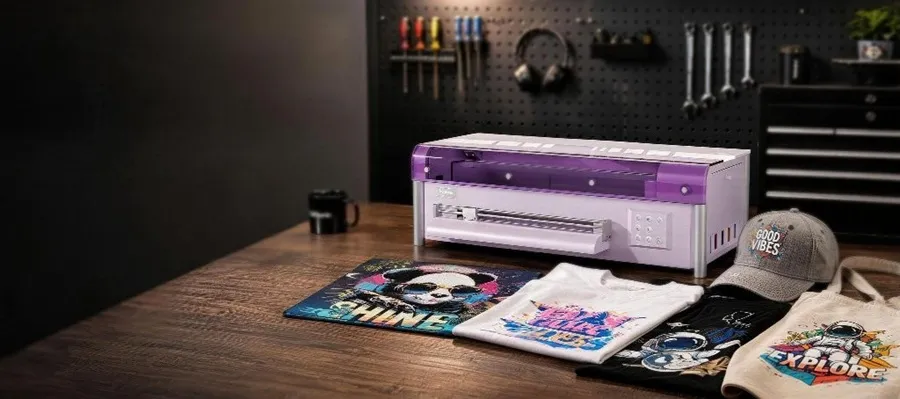
Use order profiles to evaluate process fit
Profile A is a small fashion label offering two designs across five garment colours. The printer may prepare transfers in grouped batches, while final pressing is organized by garment size and placement. The difficult part may be keeping artwork and garment specifications consistent rather than printing the film.
Profile B is a local print shop producing personalized shirts for occasional events. Artwork approval and customer name verification may consume substantial time. DTF can reduce the need for layered vinyl on complex designs, but customization still requires careful digital order management and inspection.
Profile C is a higher-frequency decorator with repeat corporate work. Faster film handling or automated powder curing may become valuable as volume increases. The shop should measure actual acceptance rate and full-cycle output before assuming that a dual-head printer or another press will resolve the bottleneck.
What an A3-size workflow can and cannot do
A3 and approximately 13-inch production systems can be practical for many chest prints, smaller back designs, tote bags and grouped logos. But the desired decoration size must fit the machine’s usable print width, which may differ from the media’s nominal width. Oversized back graphics, large continuous designs and multi-placement jobs can require alternative layout or equipment.
For each customer garment, record print dimensions and positioning measurements. Keep templates by garment size and type, and revise them after an accepted physical sample. Without these controls, a transfer may be technically well printed but visibly too small or poorly positioned on the final product.
Quality control should start before the first production run
An effective sampling plan includes a dark cotton garment, a light polyester or blend where applicable, a design with gradients and one with fine text. Check line clarity, colour, edges, hand feel and adhesion. Follow a documented laundering procedure appropriate to the product before making durability promises. Compare samples after washing, not only fresh from the press.
When a defect occurs, trace it to the stage. A missing line may begin in artwork or the nozzle pattern; powder residue suggests application or cleanup; weak adhesion may involve curing, pressing or fabric compatibility. Changing multiple variables at once makes the diagnosis slower. Record corrective actions so a repaired process remains repeatable.
Cost the full operation
The unit economics include blank garment, ink, film, powder, labor, equipment depreciation, maintenance, spoiled units, packaging and overhead. For a transfer-only supplier, add cutting, sorting and customer handling. A low raw-material figure is not equivalent to the cost of a delivered, accepted garment.
Build a cost worksheet around actual batch sizes. A run of two shirts can require nearly as much artwork approval and setup time as a larger batch. Conversely, an order with unique names may create more handling per shirt even when the total quantity is high. Use contribution margin and real machine utilization to decide which jobs to accept and how to price them.
Practical line-layout decisions
Place film handling, adhesive application, curing, cutting and pressing in a logical sequence. Keep consumables stored as instructed and separate clean garments from powder and inks. Provide suitable ventilation and operator protection based on equipment documentation and local workplace requirements. Leave safe access for maintenance rather than forcing staff to reach over hot equipment.
A small shop can improve output with organized racks, labeled gang sheets and batch tickets before investing in additional machines. Review the storage life and labeling of completed transfers before accepting future repeat orders; film, adhesive and handling conditions should follow the supplier’s instructions. The batch ticket should follow the transfer through every station and identify the customer, artwork version, garment type and pressing settings. A supervisor can use the ticket to separate approval errors from machine defects: a wrong logo version is a prepress failure, while inconsistent adhesion points toward the transfer-and-pressing stages. That distinction supports practical corrective action instead of blaming every rejected garment on printing equipment. This reduces mismatched designs and missing garments.
Frequently Asked Questions
Is DTF suitable for small-batch apparel production?
It can be particularly useful for varied, multicolour artwork in short runs, provided the transfer process and garment compatibility are tested.
Does DTF eliminate the need for garment pressing?
No. A heat press remains part of the normal process for applying the cured transfer to a garment.
Are A3 DTF printers enough for all clothing graphics?
No. Actual printable width and the intended decoration size determine whether a particular design fits. Oversized graphics may require wider equipment or a revised design.
Can DTF replace embroidery or screen printing?
Not in every application. Each method has different aesthetics, setup economics and suitability for particular jobs.
What is the most useful production metric?
Accepted finished items per hour or per shift, paired with reprint rate and delivery performance, is more informative than printhead speed alone.
Conclusion
DTF can provide a flexible link between digital artwork and small-batch garment production, but only if the shop manages every stage. Equipment, materials, safety, operator skill and quality records determine whether that flexibility translates into commercial results. The strongest process is the one that handles a real order mix repeatedly without unnecessary rework.