The global textile and apparel industry is undergoing a monumental transformation. For decades, traditional methods like screen printing and rotary printing dominated the landscape. While these methods are efficient for massive production runs, they often struggle with the agility required in today’s fast-paced, on-demand market. As consumer preferences shift toward hyper-personalization and rapid fashion cycles, manufacturers are increasingly turning toward digital innovations to stay competitive.
Among these innovations, one technology has emerged as a game-changer for small and large-scale textile producers alike: the rise of modern heat transfer methods. Specifically, the adoption of a high-quality DTF Printer is redefining how designs are applied to various fabrics, offering a level of versatility that was previously unattainable.
Understanding the Modern Printing Landscape
In the current manufacturing era, the goal is to minimize waste while maximizing output quality. Traditional inkjet systems like Direct-to-Garment (DTG) paved the way for digital printing, but they often came with limitations regarding fabric compatibility and the necessity for extensive pre-treatment. This is where Direct to Film Printers have carved out a unique niche.
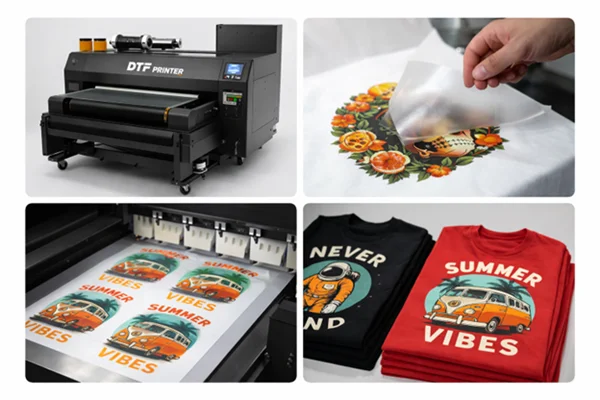
Unlike direct methods, this technology involves printing a design onto a specialized PET film, coating it with a thermoplastic adhesive powder, and then transferring that design onto the final garment using a heat press. This decoupling of the printing process from the actual fabric allows for a more controlled environment, resulting in vibrant colors and intricate details that can withstand the rigors of industrial washing.
Technical Advantages for Textile Manufacturers
For facility managers and apparel brand owners, the transition to DTF Printers offers several operational advantages:
- Substrate Versatility: One of the biggest challenges in textile manufacturing is the variety of materials used. While some digital methods are restricted to 100% cotton, film-based transfers work seamlessly on polyester, nylon, treated leather, and even synthetic blends. This allows a single production line to handle everything from sportswear to high-fashion leather accessories.
- Elimination of Pre-treatment: In traditional digital garment printing, dark fabrics require a chemical pre-treatment to ensure white ink vibrancy. This step is time-consuming and can sometimes leave a “halo” effect on the fabric. With a high-performance DTF Printer, the white ink is printed directly onto the film, followed by the CMYK layers, eliminating the need for messy liquid pre-treatments on the garment itself.
- Durability and Hand-Feel: Early transfer methods often felt like a thick layer of plastic sitting on top of the fabric. Modern film technology produces a “soft-hand” feel that is thin, stretchable, and durable. The adhesive bond created during the heat transfer process ensures that the design won’t crack or peel, even on elastic fabrics used in performance wear.
Operational Efficiency in Modern Print Shops
Integrating Direct to Film Printers into an existing textile manufacturing workflow is surprisingly efficient. Because the printing is done on rolls or sheets of film, the “printing” stage can be separated from the “transfer” stage. A factory can print thousands of transfers in advance and store them until the actual garments are ready for production. This “just-in-time” manufacturing capability reduces inventory risks and allows brands to respond to viral fashion trends within days rather than weeks.
Furthermore, the maintenance of these machines has become significantly more user-friendly. High-end industrial units now feature automated ink circulation systems and self-cleaning print heads, which are essential for maintaining the consistency required in textile manufacturing.
Sustainability: A Core Pillar of the New Era
The textile industry is under constant scrutiny regarding its environmental impact. Traditional screen printing involves significant water usage for screen cleaning and chemical waste from emulsions and inks. Digital film printing is inherently a “dry” process in comparison.
By using exactly the amount of ink required for each pixel of the design, a DTF Printer significantly reduces ink waste. Additionally, because the process doesn’t require the massive water consumption associated with screen setup and teardown, it is a much more sustainable option for manufacturers looking to reduce their carbon footprint and water usage.
The Role of Automation in Apparel Manufacturing
As we look toward the future, the combination of digital printing and automation will be the key to scaling production. Modern setups often include “all-in-one” systems where the film is printed, powdered, and cured in a continuous loop. This reduces manual labor costs and ensures that every transfer is consistent in its adhesive properties.
For businesses looking to upgrade their machinery, investing in reliable hardware is critical. Exploring the latest DTF Printers can provide the necessary technical edge to meet the demands of a globalized market.
Conclusion: Embracing the Future of Textile Printing
The shift toward film-based digital printing is not just a trend; it is a structural change in how apparel is manufactured. The ability to produce high-quality, durable, and complex designs on almost any fabric substrate—without the traditional barriers of high setup costs or chemical pre-treatments—is empowering a new generation of textile entrepreneurs.
Whether you are a local boutique looking to offer custom apparel or a large-scale manufacturer aiming to optimize your production line, the flexibility of Direct to Film Printers offers a clear path forward. As technology continues to advance, the boundaries between digital and traditional printing will continue to blur, leading to a more efficient, sustainable, and creative textile industry.