
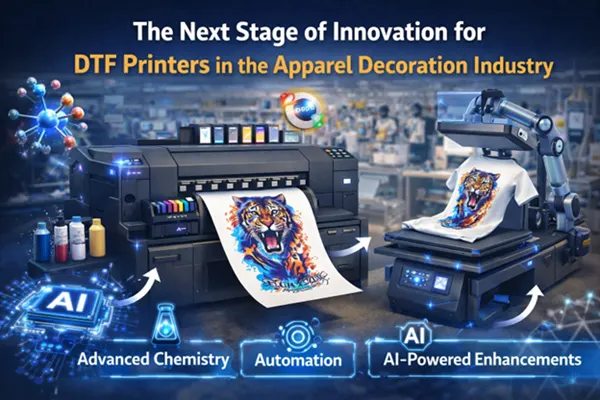
Digital printing technologies have dramatically reshaped the apparel decoration industry. Businesses that once relied on traditional screen printing or vinyl cutting are now embracing faster and more flexible digital workflows. One of the most significant developments in recent years has been the adoption of the DTF Printer method, which enables decorators to produce detailed designs that can be applied to garments using heat transfer techniques. This article is all about the next stage of innovation for DTF printers, which is redefining apparel decoration with faster production speeds, eco-friendly inks, enhanced color accuracy, and seamless fabric compatibility.
This technology has helped thousands of businesses enter the custom apparel market by simplifying production and expanding the range of printable fabrics. However, as printing technology continues to evolve, new innovations are emerging that further enhance digital workflows.
Key Factors for the Next Stage of Innovation for DTF Printers in the Apparel Decoration Industry:
The Demand for Faster Production
The growth of e-commerce and print-on-demand services has increased the need for efficient production systems. Customers expect fast turnaround times, high-quality designs, and durable prints that maintain their appearance after repeated washing.
Decorators using DTF Printers often handle a wide variety of orders, ranging from single customized items to large production runs. To meet this demand, printing technologies must balance speed, quality, and reliability.
Addressing Common Production Challenges
While digital printing has made garment decoration more accessible, certain challenges still remain. Maintenance routines, white ink management, and complex workflows can sometimes reduce efficiency in busy production environments. Hybrid transfer technologies aim to address these challenges by introducing simplified processes that reduce downtime and maintenance requirements.
By integrating different printing methods into a single workflow, hybrid systems can improve both production speed and overall reliability.
Achieving High Detail and Soft Prints
One of the most important goals in garment decoration is producing prints that are both visually impressive and comfortable to wear. Customers prefer designs that maintain their color vibrancy while feeling soft and flexible on the fabric. Modern digital printing systems focus on creating thin transfer layers that move naturally with the garment.
When decorators combine hybrid technologies with DTF printer workflows, they can achieve detailed graphics while maintaining a comfortable hand feel. This balance is especially important for fashion brands that prioritize both style and comfort.
Supporting the Growth of Custom Apparel
The custom apparel market continues to grow as businesses and consumers look for unique clothing options. From branded merchandise and promotional products to independent fashion labels, demand for customized garments shows no sign of slowing down. Digital printing technologies make it possible for businesses of all sizes to produce personalized designs quickly and efficiently.
As hybrid transfer systems continue to evolve, they will likely become an important part of the digital garment printing ecosystem. For decorators seeking reliable production methods, combining innovative transfer technologies with modernDTF printers offers a powerful solution for the future of apparel decoration.