
The fashion industry uses apparel and accessories as separate categories, which casual consumers treat as interchangeable terms. Designers and retailers, as well as fashion enthusiasts, use these two categories for their distinct purposes. Understanding the distinction is crucial for building a functional wardrobe, managing a budget, or even pursuing a career in fashion merchandising. The basic structure of an outfit comes from apparel, which people wear, while accessories add style and personal touch to their clothing. Find out details on the Differences Between Apparel and Accessories below.
What is Apparel?
Apparel refers to items worn on the body to cover, protect, and provide warmth. The essential elements of an outfit consist of these particular clothing items. The design of apparel follows human body dimensions, which include torso, legs, and arms, while clothing sizes use standard measurement systems that include small, medium, and 32×34 sizes.
Common examples of apparel:
- Shirts (T-shirts, blouses, button-downs)
- Pants (Types of jeans, denim pants, trousers, leggings)
- Dresses and skirts
- Types of Outerwear (jackets, coats, parkas)
- Underwear and Types of Socks
- Swimwear
What are Accessories?
The secondary items that people use to complete their outfits function as accessories to their main clothing. People use these items to create their desired appearance through wearing or carrying them. Accessories provide limited body coverage, which people use for protection purposes while they create specialized attention to the neck, wrist, and waist regions, and develop functions for item transport and timekeeping.
Common examples of accessories:
- Jewelry (necklaces, earrings, rings, bracelets)
- Bags (handbags, backpacks, clutches)
- Footwear (types of shoes, boots, sandals)
- Headwear (hats, headbands, beanies)
- Belts and scarves
- Watches and eyewear (sunglasses, prescription glasses)
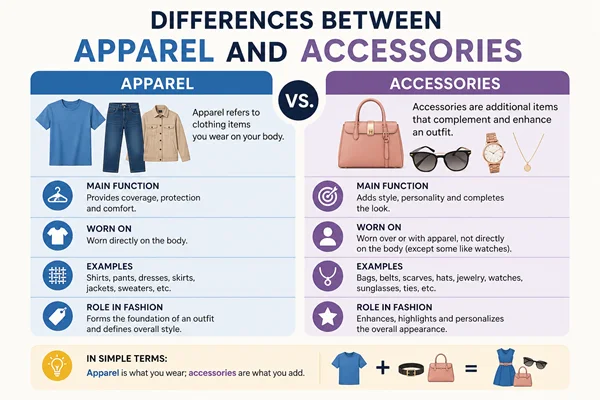
Differences Between Apparel and Accessories
Below is a detailed table outlining the major differences between apparel and accessories.
| Feature | Apparel | Accessories |
|---|---|---|
| Primary Role | Foundation of the outfit; provides coverage and protection | Enhancement of the outfit; provides decoration and personal flair |
| Body Coverage | Covers large areas (torso, legs, arms) | Covers small areas (neck, wrists, head, waist) or is carried (bags) |
| Size System | Complex, variable (XS-XL, numeric 0-16, waist/inseam) | Simple, universal (one-size, adjustable, inch/cm lengths) |
| Social Necessity | Generally mandatory in public settings | Optional; chosen to complete a look |
| Material Quantity | High (yards of fabric required) | Low (small amounts of leather, metal, or fabric) |
| Construction Time | Longer (multiple pattern pieces, seams, linings) | Shorter (cutting, simple stitching or metalwork) |
| Fit Requirement | Must fit body precisely to be functional | Looser fit requirement; often adjustable or non-restrictive |
| Seasonal Dependency | High (heavy layers for winter, breathable for summer) | Low (many items like jewelry/ bags are used year-round) |
| Price Range (Avg) | Wide (10t−shirtto2,000+ coat) | Wide (5sunglassesto10,000+ handbag) |
| Maintenance | Frequent washing/dry cleaning (body contact) | Less frequent cleaning (spot cleaning or polishing) |
| Storage Method | Hung on hangers or folded in drawers | Placed in boxes, trays, or hung on racks/hooks |
| Examples | Jeans, blazers, sweaters, dresses, shorts | Hats, belts, necklaces, wallets, gloves, ties |
Conclusion
The complete look of a person depends on the combination of apparel with accessories, although both elements function as separate entities. The essential foundation of any outfit exists through apparel, which functions as the basic framework of a space. Accessories function as decorative elements in a room, which include art pieces, lighting fixtures, and decorative throw pillows. The process of building an adaptable and practical yet fashionable closet starts when you understand that clothing serves functional purposes while accessories exist for decorative and personal expression. That is the difference between apparel and accessories in fashion.