
As the temperature drops, there is a need for comfortable fabrics in the apparel and home textile sectors. Therefore, fleece and sherpa emerge as the most favorite warm materials. Although they look and feel similar, they have distinct properties, uses, and textures. Here is an advanced review of fleece vs sherpa and the essence of each fabric. This article presents what is the difference between fleece and sherpa fabric; fleece vs sherpa.
To explain the fleece vs sherpa, you must have to confess that both are winter clothing, and both can provide you comfort. Then what are the differences between them?? Let’s find the answer below:
Fleece Fabric
Most people mean a knit fabric, usually polyester, when they say “fleece.” A social phenomenon of the outdoors equipment boom toward the closing decades of the 20th century, the fleece was intended to provide an insulation option that offered the same characteristics as wool but without the weight, itchiness, and drying time.
The most recognizable hallmark of fleece has always been its original brushed nap, clearly distinguished as a top surface that has been combed multiple times to raise its tiny fibers, also remembered for the plush feel. On the other hand, it’s lightweight, dries quickly, and is quite durable, winning the hearts of many brands for fleece from pullovers to textiles.
What is Sherpa Fabric
Sherpa, by contrast, is all about texture and depth. Drawing inspiration from the traditional wool-lined garments worn by the Sherpa people of Nepal, modern Sherpa fabric, too, is mostly polyester. But instead of flat knitting, it is made with a curly pile, giving the appearance and warmth of sheepskin fleece.
Running your fingers through Sherpa gives you that fluffy, teddy-bear sensation. It is thicker or has more trapped air, with heat retention decreased at times due to the bulkiness of the material.
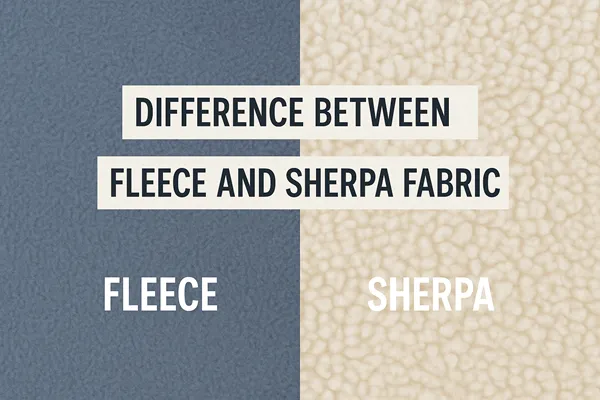
Difference Between Fleece and Sherpa Fabric: Fleece vs Sherpa
Here’s a detailed to know about what is the difference between fleece and sherpa Fabric in a tabular sheet:
| Feature | Fleece | Sherpa |
| Material | Synthetic (usually polyester) | Synthetic (polyester or acrylic blend) |
| Texture | Soft, smooth, slightly fuzzy | Ultra-plush, fluffy, mimics sheepskin |
| Thickness | Varies (light to heavy) | Typically, thicker and more insulating |
| Warmth | Good insulation, breathable | Extremely warm, cozy, and less breathable. |
| Weight | Light to medium | Medium to heavy |
| Durability | Durable, resists pilling over time | Less durable, may shed or flatten |
| Moisture-Wicking | Yes (dries quickly) | No (traps moisture slightly more) |
| Common Uses | Jackets, blankets, sweatshirts, liners | Jackets, blankets, boot liners, home decor |
| Care | Machine washable, easy to maintain | Requires gentle washing (may shed) |
| Cost | Generally affordable | Slightly more expensive |
| Appearance | Uniform texture, matte finish | Shaggy, fluffy, faux-sheepskin look |
| Breathability | Good breathability | Less breathable, more insulating |
| Best Uses | Sportswear, blankets, mid-layers, hoodies | Linings, trims, outerwear, cozy throws |
Final Thoughts
Both fleece and sherpa offer comfort and warmth, but each has its unique characteristics. Fleece is practical, lightweight, and sporty, while sherpa is plush, ultra-soft, cozy, and thicker than fleece, perfect for cold days. By understanding their differences Between Fleece and Sherpa Fabric: Fleece vs Sherpa, you can choose the right fabric to stay warm and cozy all winter long.