
What is Textile?
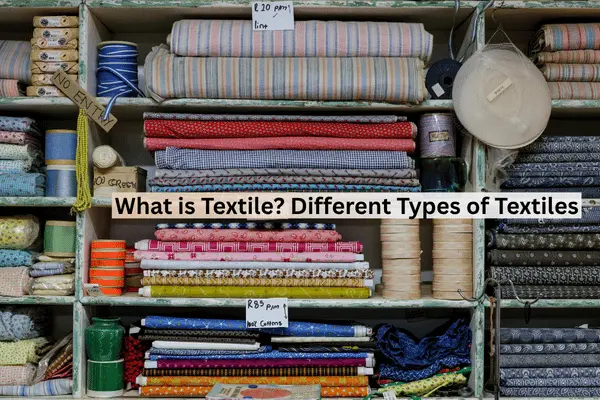
The term ‘Textile” is a Latin word originating from the word ‘texere’ which means ‘to weave’. Examples of Textiles are fibers, yarn, fabric, dyeing, printing, or clothing in the textile industry, and these things are manufactured through processes like spinning, weaving and knitting, etc. Textile design and fashion are also part of the textile. Textiles are classified by fiber types, fabric types, weaving types, and end-use types. This article is about ‘Textile definition, What is Textile? Different Types of Textiles.
Definition of Textile: Textile is defined as any material made by weaving, knitting, felting, or bonding fibers together to create fabric or cloth.
Textile is a flexible material consisting of a network of natural or artificial fibers. Yarn is produced by spinning raw fibers of wool, flax, cotton, hemp, or other materials to produce long strands. Textiles are formed by weaving, knitting, crocheting, knotting, tatting, felting, or braiding. In the past, all textiles were made from natural fibers, including plant, animal, and mineral sources; in the
20th century, these were supplemented by artificial fibers made from petroleum, etc.
Textiles are made in various strengths and degrees of durability. The relative thickness of fibers in cloth is measured in denier x’. Textiles have an assortment of uses the most common of which are for clothing and for containers such as bags and baskets in the workplace they are used in industrial and scientific processes such as filtering textiles are used in many traditional crafts such as sewing quilting and embroidery miscellaneous uses include flags backpacks tents nets handkerchiefs cleaning rags transportation devices such as balloons, kites’ sails and parachutes in the household they are used in carpeting upholstered furnishings window.
Different Types of Textiles
Normally, the textiles are classified according to the component fibers. For example, we can divide them into fibers that are made of silk, wool, linen, or cotton, which are natural and made up of natural fibers.
Similarly, there are textile products that are made from synthetic fibers like rayon, nylon, and polyester, so this is another category of textile that is made of man-made or synthetic fibers.
Similarly, they are textile products that are made from inorganic fibers like cloth of gold, glass fiber, or asbestos cloth, so based on the type of fiber which we are using, we can classify them into different categories, either natural, made from natural fiber, made from synthetic fiber, or some kind of inorganic fiber.
Similarly, how they are made, actually. We can divide the textiles on the basis of their structure or weaving process, whether they are woven or knitted, or they are just made of composites. So based on their manufacturing process, we can also categorize them, then another factor which can be used to categorize is the value or quality of textiles and they’re actually also depending on various factors one of them is the quality of the raw materials what kind of quality an of the raw material we are using and then another parameter is the vector of the yarn which is one from the fiber.
So, whether that yarn is either clean, it is smooth, it is fine or it’s just a coarse. Kind of material, we also have to see whether it is twisting this hard for a medium so that it actually determines the quality of the finer details of a textile product. Similarly, the density of weaving and finishing processes is an important element in determining the quality of fabrics and actually plays a role in categorizing the textile products based on their quality.
Different Types of Textile Materials
Here is a comprehensive breakdown of the types of textiles, organized by their source (fiber), structure, and common use cases.
1. By Fiber Source (The Raw Material)
Textiles are first classified by what they are made of.
Natural Fibers
Derived from plants, animals, or minerals.
- Plant-Based (Cellulose):
- Cotton: Soft, breathable, absorbent. Used for t-shirts, denim, and bedding.
- Linen: Made from flax. Strong, crisp, and gets softer with age. Used for suits, tablecloths, and summer wear.
- Hemp: Durable, mold-resistant, eco-friendly. Used for rope, bags, and heavy-duty clothing.
- Jute: Rough, brittle, golden-brown. Used for burlap, rugs, and sacks.
- Animal-Based (Protein):
- Wool: From sheep. Warm, elastic, fire-resistant. Used for sweaters, suits, and blankets.
- Silk: From silkworms. Luxurious, smooth, strong, shiny. Used for evening wear, ties, and pillowcases.
- Cashmere: From goats. Extremely soft, lightweight, insulating.
- Alpaca: Lighter and warmer than wool. Hypoallergenic.
- Mineral:
- Asbestos (historically): Fireproof but hazardous.
- Fiberglass: Glass fibers. Used for insulation, industrial fabrics.
Synthetic (Man-Made) Fibers
Created through chemical processes, often from petroleum.
- Polyester: Strong, wrinkle-resistant, quick-drying, cheap. The most common textile worldwide. Used for sportswear, jackets, and bottles (recycled).
- Nylon: The first synthetic fiber (1935). Very strong, elastic, abrasion-resistant. Used for hosiery, swimwear, ropes, and umbrellas.
- Acrylic: Fake wool. Light, warm, but pills easily. Used for sweaters, scarves, and fleece.
- Spandex (Lycra/Elastane): Extremely stretchy (500%+). Used for activewear, underwear, and medical braces.
- Polypropylene (Olefin): Moisture-wicking, stain-resistant. Used for diapers, car interiors, and thermal underwear.
- Rayon/Viscose: Semi-synthetic (plant-based, chemically processed). Breathable like cotton, drapes like silk. Used for dresses, linings, and blouses.
2. By Fabric Structure (How it is Made)
The same fiber (e.g., cotton) can look very different depending on how it is constructed.
Woven Fabrics (Interlacing two yarns at right angles)
- Plain Weave: Simplest (over-under).
- Examples: Poplin, Chiffon, Muslin, Canvas.
- Characteristics: Strong, durable, holds shape.
- Twill Weave: Diagonal ribs.
- Examples: Denim, Chino, Gabardine, Tweed.
- Characteristics: Drapes well, hides dirt, durable.
- Satin Weave: Floating yarns create a shiny surface.
- Examples: Satin (shiny front, dull back), Sateen (cotton version).
- Characteristics: Smooth, glossy, and snags easily.
Knitted Fabrics (Interlooping one continuous yarn)
- Weft Knit: Knits like hand-knitting (e.g., T-shirts).
- Examples: Jersey (single knit), Rib knit (stretchy cuffs), Interlock (double knit).
- Characteristics: Stretchy, comfortable, can curl at edges.
- Warp Knit: Knits by machine (less stretch).
- Examples: Tricot (lingerie), Mesh (sports jerseys).
- Characteristics: Run-resistant, stable.
Non-Woven Fabrics (Bonded together by heat, chemical, or friction)
- Examples: Felt, Pellon (interfacing), Tyvek (house wrap), Spunbond (face masks).
- Characteristics: No grain, cheap, disposable or durable.
Other Structures
- Lace: Openwork fabric with decorative holes (made by looping, twisting, or knitting).
- Felt: Matting fibers together (no weaving or knitting). Thick, non-fraying.
3. By Finishing or Special Property
Textiles are often treated to achieve specific functions:
- Water-resistant: Treated with DWR coating (e.g., rain jackets).
- Flame-retardant: Chemically treated (e.g., mattresses, kids’ pajamas).
- Stain-resistant: Scotchgard or Teflon coating (e.g., sofas, table linens).
- UV-protective: Treated to block ultraviolet rays (e.g., swim shirts).
- Antimicrobial: Silver-infused or treated to prevent odor (e.g., workout gear, socks).
4. Quick Summary Table by Use Case
| Use Case | Best Textile Types |
|---|---|
| Summer T-shirt | Cotton Jersey, Linen, Rayon |
| Winter Sweater | Wool, Cashmere, Acrylic knit |
| Business Suit | Wool Twill, Polyester blend, Linen (summer) |
| Sports Bra / Leggings | Nylon + Spandex, Polyester (performance) |
| Formal Evening Gown | Silk Satin, Chiffon, Velvet |
| Bed Sheets | Cotton Percale (crisp), Cotton Sateen (soft), Linen |
| Outdoor Jacket (Rain) | Nylon (ripstop) with DWR, Polyester fleece inside |
| Upholstery / Curtains | Cotton Canvas, Polyester, Velvet, Acrylic (fade-resistant) |
The Most Important Modern Category: Blends
Most textiles today are blends (mixing fibers) to get the “best of both worlds.”
- Poly-Cotton (65% Polyester / 35% Cotton): Wrinkle-resistant like poly, breathable like cotton. (Standard for cheap dress shirts).
- Elastane blends (Cotton 95% / Spandex 5%): Jeans that stretch.
- Wool / Nylon: More durable socks.
Understanding these categories helps you choose the right textile for a specific climate, budget, or durability requirement.
- You may read more: What is Textile Industry? Definition, Meaning, Processes, Types