
Computerized sewing machines have become popular among sewers because their advanced features make sewing easier and more precise. They come with some drawbacks that make some people hesitant to use them. This article is about the Features, Advantages, and disadvantages of a computerized sewing machine.
A computerized sewing machine is a sewing machine that uses a computerized system to control the sewing and other functions of the machine. It has a digital display that allows you to select stitch type, length, and width, among other settings. Some computerized sewing machines also have automatic features such as thread cutting, needle positioning, and bobbin winding.
Sewing is a skill that requires precision and accuracy to produce high-quality products. A sewing machine is an essential tool for any sewer, and technology has made sewing easier for us with the introduction of computerized sewing machines. In this article, we will discuss the pros and cons of using a computerized sewing machine.
Features of a Computerized Sewing Machine
| # | Feature | Description / Benefit |
| 1 | Built-in Stitch Patterns | Includes hundreds of stitches (50–300+): utility, decorative, stretch, heirloom, plus automatic one-step buttonholes (4–10+ styles) |
| 2 | LCD Screen | Displays stitch settings (length, width, tension, needle position); touchscreen on higher-end models |
| 3 | Automatic Needle Threader | Lever and hook system threads the Parts of needle eye automatically with one push or button |
| 4 | Adjustable Speed Control | Slider or button to limit maximum speed; ideal for beginners or precision sewing |
| 5 | Precise Stitch Regulation | Digital motor control ensures even stitching at very slow or very high speeds |
| 6 | Needle Up/Down Setting | Stop with needle in fabric (for pivoting corners) or fully raised (for removing work) |
| 7 | Memory & Editing Features | Store custom stitch combinations; mirror, elongate, or flip stitches (on select models) |
| 8 | Start/Stop Button | Sew without using the foot pedal; great for knee control or users with arthritis |
| 9 | Automatic Tension Adjustment | Sensors adjust thread tension based on selected fabric and stitch type |
| 10 | Error Warnings & Safety | Beeps for problems like jammed bobbin, incorrect threading, or low bobbin thread |
| 11 | Twin Needle Guard | Prevents needle clash when sewing with two needles for parallel rows of stitching |
| 12 | Direct Stitch Selection | Press numbered buttons or icons instead of manually turning mechanical dials |
| 13 | Accessory Compatibility | Includes extension tables, quilting guides, and multiple presser feet (zipper, buttonhole, etc.), often stored onboard |
| 14 | USB/Computer Connectivity | Import new stitch patterns or embroidery designs from a PC; update firmware (advanced models) |
| 15 | Built-in Sewing Advisor | Suggests optimal stitch type, length, width, and presser foot for chosen fabric (e.g., denim, silk) – available on Singer, Brother models |
| 16 | Auto-Off Feature | Powers down after inactivity to save energy and extend LED light life |
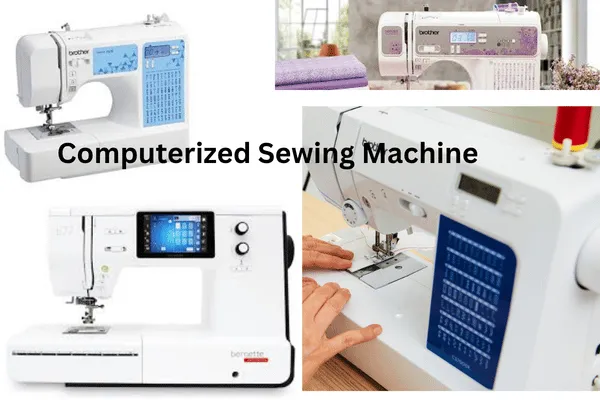
Computerized sewing machine vs. mechanical sewing machine: what are the differences?
| Feature | Mechanical Sewing Machine | Computerized Sewing Machine |
|---|---|---|
| Control | Manual knobs, dials, and levers | Digital buttons, touchscreens, or LCD panels |
| Stitch Selection | Turn a dial to select stitch type | Press a button or touch icon to select stitch |
| Stitch Precision | Relies on mechanical alignment; can vary slightly | Electronically controlled for consistent, precise stitches |
| Motor & Speed | Basic motor; speed controlled by foot pedal pressure | Often has a more efficient motor; may offer speed limiting slider |
| Ease of Use | Steeper learning curve for adjusting settings | More beginner-friendly with automated features |
| Maintenance | Simpler, easier to repair and service at home | More complex electronics; may require professional repair |
| Durability | Very durable, fewer electronic parts to fail | Durable but electronics can fail with power surges or moisture |
| Price | Generally lower cost (100–300) | Higher cost (300–2000+) |
| Noise Level | Usually louder due to mechanical gears | Quieter operation |
| Weight | Heavier (metal internal frame) | Often lighter (more plastic components) |
Best computerized sewing machine Brands:
The top computerized sewing machine brands are listed below:
Advantages of a Computerized Sewing Machine
Easy to use
The most notable advantage of a computerized sewing machine is its ease of use. With its digital display and automatic features, a computerized sewing machine is easy to operate, even for beginners. You don’t have to worry about manually adjusting stitches or cutting threads, because the machine does it for you.
Clarity and accuracy
Another advantage of a computerized sewing machines its accuracy and precision. With its computerized system, the machine can produce consistent and even stitches, ensuring a high-quality finished product. This is especially important for tailors who make garments or other items that require precise measurements and tailoring.
Automatic feature
Computerized sewing machines come with automatic features that make sewing easier and more efficient. For example, some machines have automatic thread cutters that cut the thread as you finish sewing, eliminating the need for scissors. Others have needle positioning features that allow you to stop the needle in the up or down position, making it easier to pivot the fabric.
Versatility
Finally, computerized sewing machines are versatile and can handle a wide range of fabrics and projects. With their variety of stitches and settings, you can sew anything from a simple hem to an intricate embroidery design. You can adjust the stitch length and width to accommodate different fabrics and sewing techniques.
Disadvantages of computerized sewing machines
Cost
One of the main disadvantages of a computerized sewing machine is its cost. They are more expensive than mechanical sewing machines and the cost may increase depending on the features and capabilities of the machine. However, if you plan to use your sewing machine frequently or for commercial purposes, the investment may be worth it.
Complexity
Computerized sewing machines are more complex than mechanical machines, and may require a bit of a learning curve to operate. You need to learn how to use the digital display and navigate through the various settings and options. Additionally, if the machine breaks down, it can be more challenging to repair than a mechanical machine.
Dependence on technology
Computerized sewing machines rely on technology, which means they can be prone to errors and mistakes. When a computerized system malfunctions, it can be difficult to diagnose and repair, and may require a technician with specialized knowledge to fix it. Additionally, you may not be able to use the machine if you do not have access to electricity or if the power goes out.
A computerized sewing machine offers many advantages, including ease of use, accuracy, automatic features, and versatility. However, it also comes with a few drawbacks, including cost, complexity, and reliance on technology. Ultimately, whether or not to use a computerized sewing machine comes down to your personal preference and sewing needs.