
What is Stitch in Apparel?
Stitching is a very important factor in making clothes. In the apparel industry, sewing is a single bend or a yarn loop. Sewing is the basic material for making sewing, knitting, embroidery, crochet, or needle lace. There are different types of stitches, each with one or more names, and they are used for specific purposes. Stitching is the process that produces holes during the sewing process, where every hole is a stitch. Stitches have different types, and here we are discussing them. Here, we are going to discuss different types of stitches used in the Apparel industry.
Sewing stitch types can sometimes be used to decorate an item, but more often serve a utilitarian function. Occasionally, they are both functional and decorative. Sewing can be done by hand sewing or by machine sewing, and frequently serves to hold several sections of an accessory together. Examples include sewing the sole of a shoe to the upper section, stitching the parts of gloves together, or sewing together pieces of a handbag. Sewing stitches may be used to finish the edges of items, such as scarves or handkerchiefs.
Types of Stitches according to Stitch Class
About 60-70 types of stitches are used in the garment industry. All these types of stitches are divided into six main categories. They are
- Stitch class-100: Chain stitch
- Stitch class-200: Hand stitch
- Stitch class-300: Lock stitch
- Stitch class-400: Multi-thread chain stitch
- Stitch class-500: Overedge/ Edge neatening chain stitch
- Stitch class-600: Covering chain stitch
Stitch class-100: Chain stitch
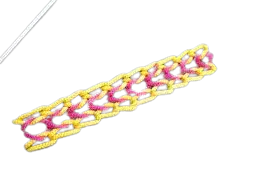
Chain stitch is a sewing and embroidery technique where a series of loop stitches is made into a chain-like pattern. Chain stitch is an ancient craft that we find in many ancient industries. Chain stitches mimic a certain “drawing’ on a thread. It is commonly used for decorative outlines, borders, needle lace, crochet, and embroidering letters. But you can also be creative and use chain stitching in more informal ways.
Stitch class-200: Hand stitch
The origin of this class of sewing is hand sewing. It is made by a special kind of needle and sewing machine, called a pick stitch sewing machine. This type of stitch is used in the coating of jackets, coats, and expensive fabrics, and stitch type-209 is used for the edges of the jacket. However, it is quite time-consuming, expensive, and rare to use. In our home, we usually use it to stitch, which basically requires thread and parts of a needle. So somewhere we are all introduced to it. Our women use this most often to sew regular clothes like blouses, dresses, pants, uniforms, etc.
Stitch class-300: Lock stitch
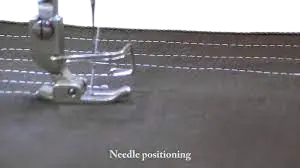
This type of stitch is widely used in sewing and zigzag type, lace, elastic, fabric attachments such as pockets, collars, cuffs, facing, etc. These types of stitches are safe, high-strength, and extensible. The main problem with the lock stitch is that the bobbin thread has to be changed frequently due to the low capacity of the bobbin. This type of sewing uses more than one set of threads. A set of threads is attached to another thread and forms a bond.
Machine stitch is done with one of the threads coming across the top of the machine, around the tension, and through the needle. The other thread comes from a bobbin on the underside of the machine.
Stitch class-400: Multi-thread chain stitch
This type of stitch is made by sewing with a set of two or more threads. Two or more threads are also used in this type of stitching. One set of yarn is called needle thread, and the other set is called looper thread. Stitch type 401 is the most common in this category. It is used for long stitching in jeans and trousers. Its extensibility is similar to that of a lock stitch.
Stitch class-500: Overedge/ Edge neatening chain stitch
Stitch type-504 is commonly used for fabric edge decoration. It is also used in many cases in the combination of lock stitch and chain stitch. Type-512 is quite suitable for sewing light fabrics. Stitch type-514 is used for thicker fabrics. This type of stitch has more extensibility. Like chain stitch, It also uses two or more sets of threads
Stitch class-600: Covering chain stitch
Covering chain stitch: This type of stitch is made up of three threads. The threads are needle thread, top cover thread, and bottom cover thread. Stitch type-602 is the most common in this category. It is used to attach knit fabric with tape, lace, braid, and elastic. This type is also used for making a cover stitch and for sewing the top of the fabric. Stitches under this group are very complex and may require up to 9 threads.
Different types of stitching for clothing and the garment industry
| Garment | Critical Types of Stitching uses (ISO) |
|---|---|
| T-Shirt Hem | 406 (Bottom Coverstitch) or 602 |
| Jeans Inseam | 301 + 516 (Safety Stitch) or 401 (Chainstitch) |
| Dress Shirt Side Seam | 301 (Lockstitch) + 504 (Overlock finish) |
| Leggings / Activewear | 401 (Chainstitch) or 512 (4-Thread Overlock) |
| Jacket Lapel | 301 (Lockstitch) (invisible when pressed) |
| Buttonhole | 304 (Zigzag Lockstitch) on a dedicated machine |
Summary by Function:
- Strength & Durability: 301 (Lockstitch), 516 (Safety Stitch)
- Elasticity / Stretch: 401, 406, 504, 512
- Edge Finishing (Anti-Fray): 504, 512
- Skin Comfort / Flat Finish: 406, 602, 605 (Coverstitches)
- Decorative: 304 (zigzag), 301 (topstitching), 407 (wide coverstitch)