Woven fabric and knit fabric are two of the most common types of fabric used in the textile and clothing industry. Woven is used for formal dress clothing, and knit is used for casual dresses. The main difference between the two lies in their manufacturing process, structure, and yarn properties. Because of these differences, the uses and functions are different between Woven Fabric and Knit Fabric.
Woven Fabric
Two sets of yarns are interlaced at right angles to provide a sturdy and robust structure for woven cloth. Yarns used to make woven fabric are straight and difficult to stretch. Denim, cotton, silk, and wool are a few examples of woven fabrics. It is a very durable, strong, and non-stretchy fabric. Woven fabrics are produced on a loom machine through the weaving process. Uses of woven fabrics are home textiles, shirts, pants, skirts, and many other types of clothing.
Knit Fabric
knit fabric is made by interlocking loops of yarn, creating a more stretchy and flexible fabric. The yarns used in knit fabric are curved, which allows the fabric to stretch and move with the body. Knit is a less durable and more stretchy fabric than woven fabric. Examples of knit fabrics are jersey, rib knit, and sweater knit. Separate knitting machines use manufactured knit fabric. Knit fabric is used in T-shirts, polo shirts, sweaters, socks, shirtings, sportswear, swimwear, cardigans, sweatshirts, and leggings.
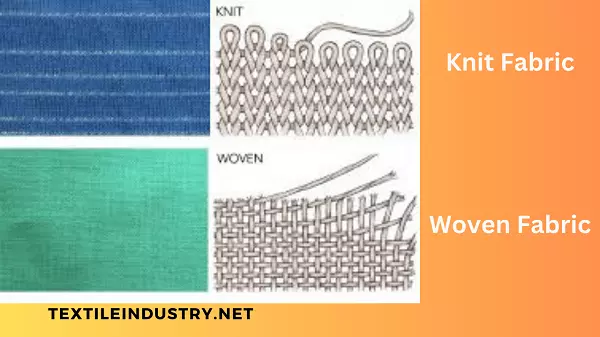
Differences between Woven Fabric and Knit Fabric
Here is the comprehensive Difference between Woven Fabric and Knit Fabric in the following:
| SI No. | Woven Fabric | Knit Fabric |
| 1 | Structure single yarn is an interlacement | Warp and Weft both types use to produce woven yarn |
| 2 | Here uses one kind of yarn only | More open spaces give better air permeability and moisture management. |
| 3 | Woven fabric is thinner and easy to handle. | Knitted fabric is much thicker and softer than woven fabric as it has a complicated 3-dimensional structure. |
| 4 | Less comfort due to tight structure | Generally, woven fabric can be produced in extremely tight and with higher coverage when compared with knitted fabric. |
| 5 | Woven garments retain their shape | Generally, knitted fabric is looser in structure. |
| 6 | Knitted fabric has higher extensibility and instant recovery ability than woven fabric, up of one yarn only. | Knitted fabric has higher extensibility and instant recovery ability than woven fabric. Up of one yarn only. |
| 7 | Woven fabric has poor extensibility. | Woven fabric has selvage. |
| 8 | Easy to sewing | Generally have more stretch. |
| 9 | Poor crease resistance | High crease resistance |
| 10 | Woven fabric have selvage. | Knit fabric have no selvage. |
| 11 | Fabric can be produced from yarn packages. So process route is very short. | Fabric can be produced from yarn packages. So process route is concise. |
| 12 | Conversion from yarn to fabric involves various processes. The conversion cost is higher. | Conversion requires no preparation, so conversion cost is low. |
| 13 | Preparation includes a sizing of warp yarn that has to remove before color application, which may cause environmental pollution. | The yarn is just waxed. No need to size the yarn, so development cause fewer environmental hazards. |
| 14 | The popularity of sportswear, hosiery, underwear, and high fashion knitwear creates a strong demand for knitted fabric every 14year which cannot be replaced by woven fabric. | The yarn is just waxed. No need to size the yarn, so development cause less environmental hazards. |
| Knitted fabric | Woven fabric |
| High crease resistance than woven fabric | Lower crease resistance property |
| No ironing required | Ironing is required |
| Less strong than woven fabric | Stronger than knitted fabric |
| Absorption capacity is more | Woven fabric has a low absorption capacity |
| More permeable to air and moisture | Less permeable to air and moisture |
| Highly elastic fabric | Elasticity is comparatively less |
| Knitted fabric has less dimensional stability | Woven fabric has more dimensional stability |
| Ends curling tendency is higher | End curling tendency is comparatively lower |
Both of them are very ancient techniques to produce fabric. Hopefully, you all understand the differences between Woven Fabric and Knit Fabric.
- You may love to read: Classification of Fabrics and their uses
- What is Knitting | Types of (Knitted) Knit Fabrics
- Best Fabric Materials for Manufacturing Safety Workwear